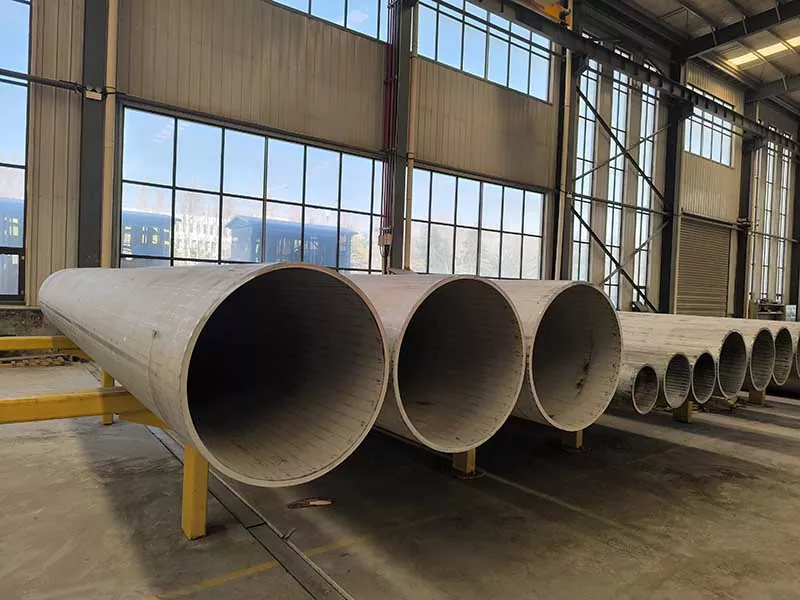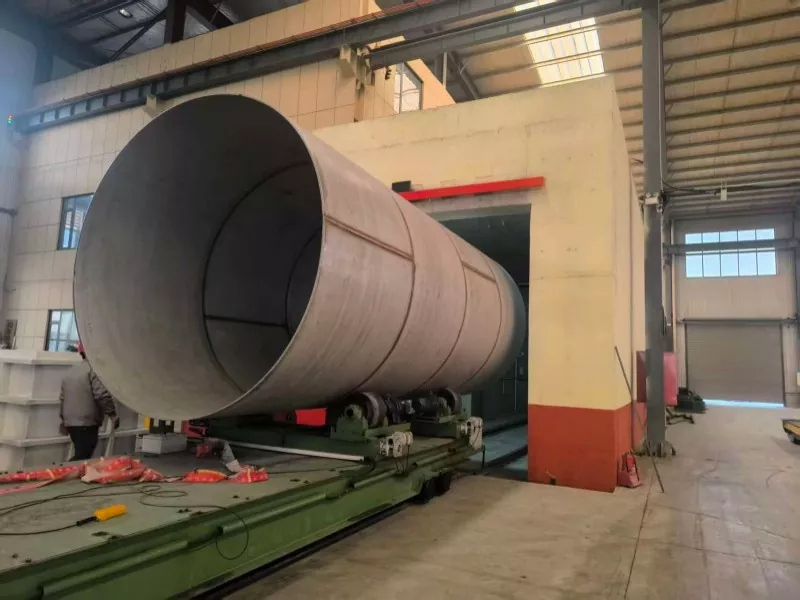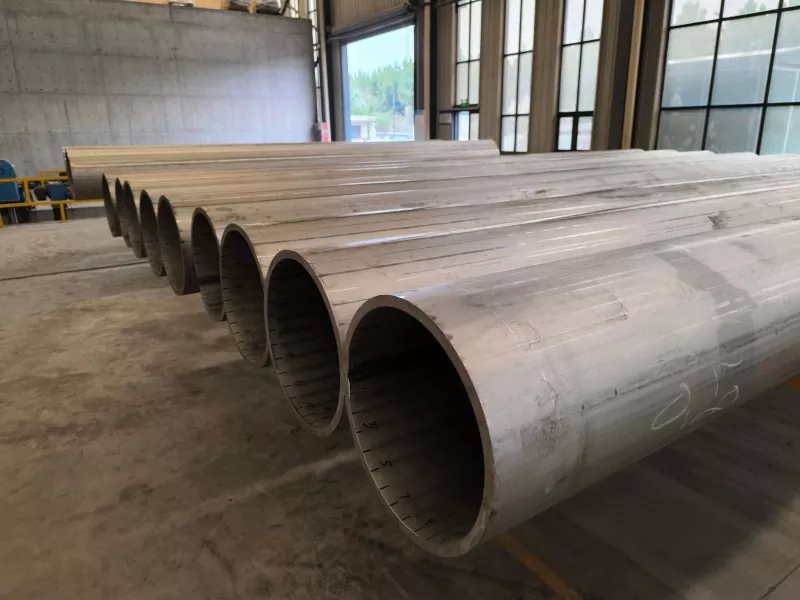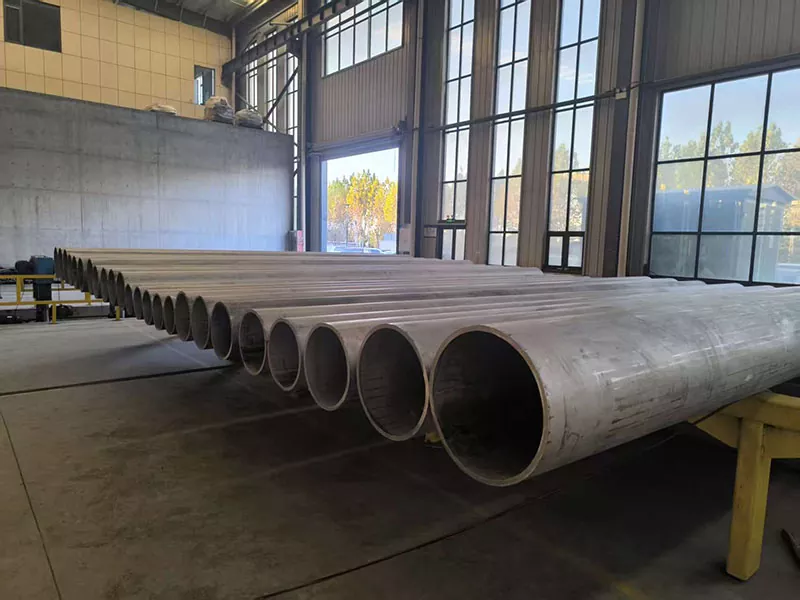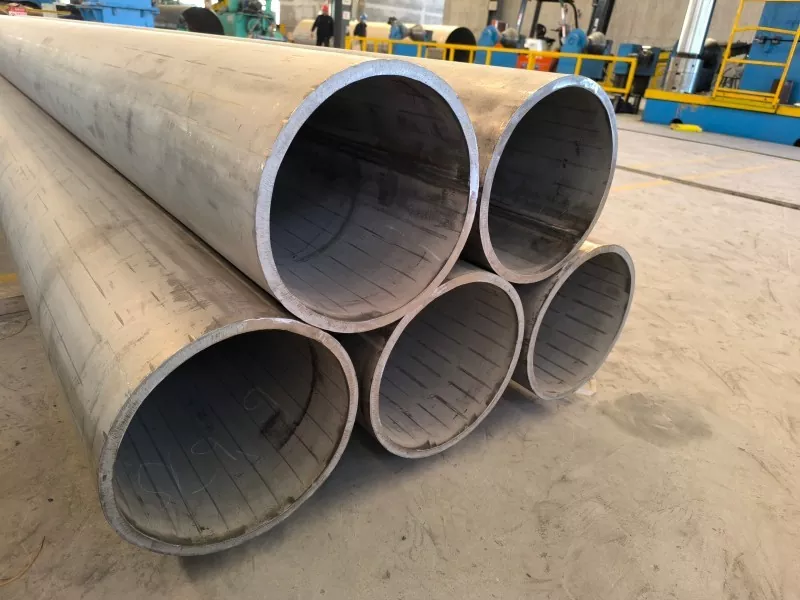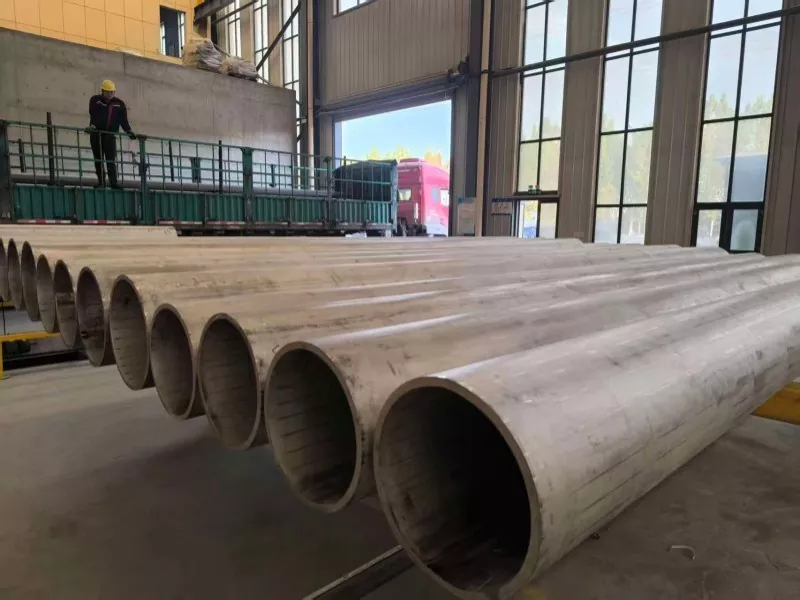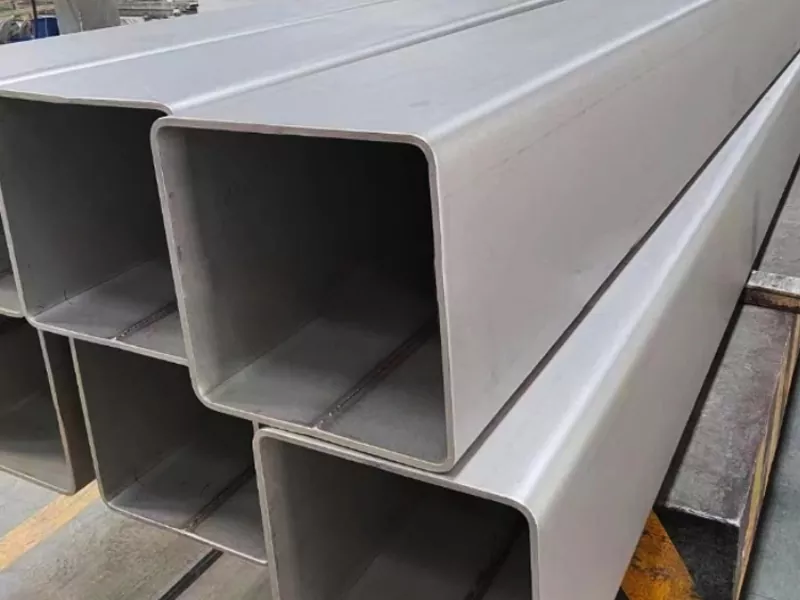
Stainless Steel Welded Pipe
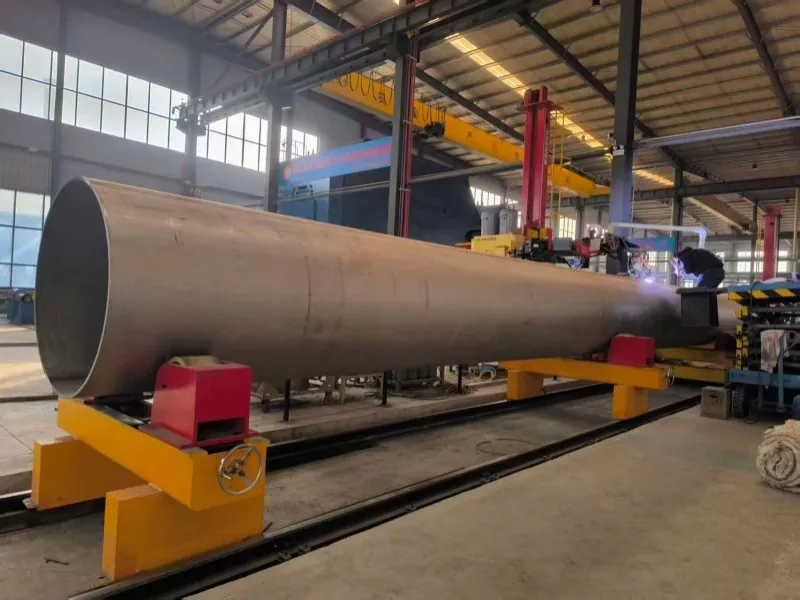
Water treatment is not just a process; it’s a promise. From municipal plants securing clean drinking water for millions to industrial facilities reclaiming wastewater for reuse, the backbone of every safe, efficient system is the network of pipes that silently moves, filters, and delivers. At Shiwei Industry And Trade Group Co., Ltd., we understand that when you select a stainless steel welded pipe for water treatment, you are investing in decades of uninterrupted service, absolute corrosion resistance, and a legacy of trust. Our pipes are not merely conduits—they are engineered guardians of purity, shaped by advanced metallurgy and a relentless commitment to excellence.
Water itself can be a surprisingly aggressive medium. Minerals, chemicals used in purification, fluctuating temperatures, and constant pressure cycles can degrade conventional materials alarmingly fast. Traditional carbon steel with internal linings eventually fails at joints. Plastics may leach substances or lack mechanical strength for large-diameter mains. Here, the Stainless Steel Welded Pipe for Water Treatment stands apart. By fusing high-strength steel with the innate passivity of chromium oxide, our pipes maintain an inert, hygienic surface that resists pitting, scaling, and biofouling. The welded construction ensures uniform wall thickness and dimensional precision, allowing seamless integration into any treatment train.
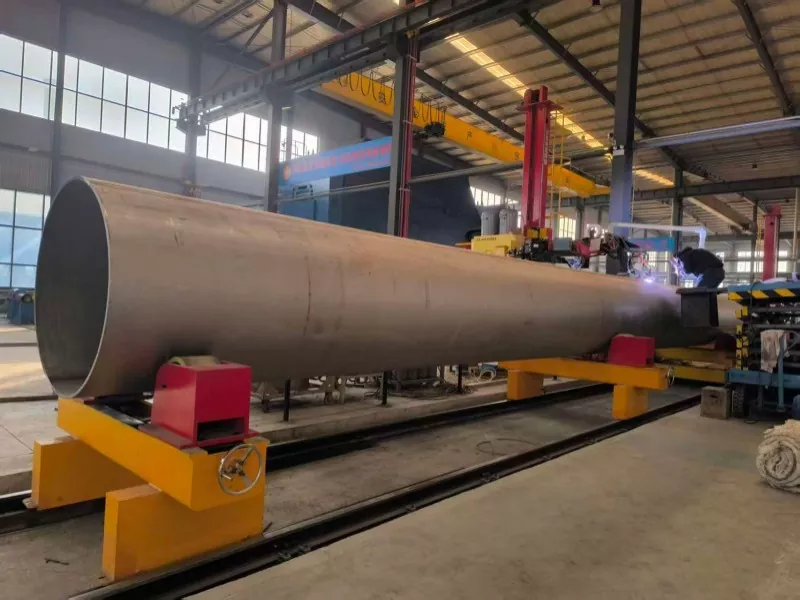
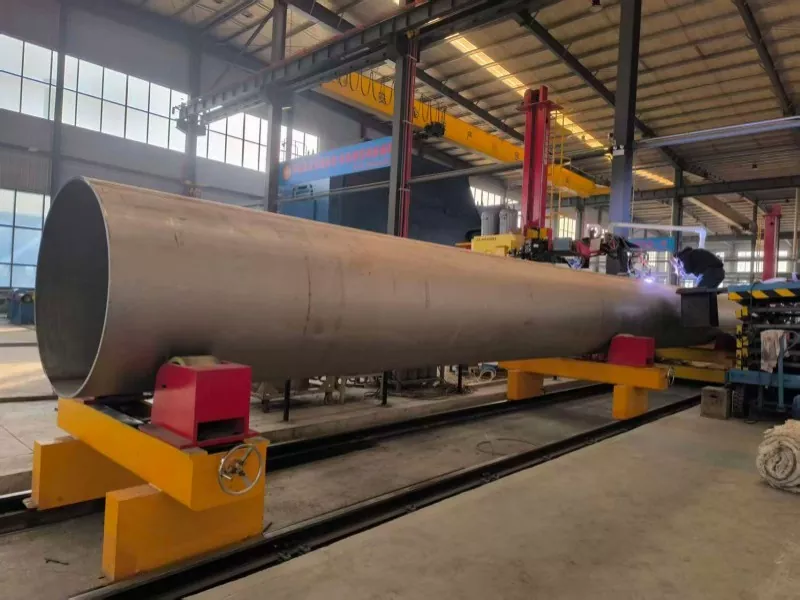
Imagine a desalination plant operating under scorching coastal sun. Salt-laden air, warm brine, and high-velocity flows create a perfect storm for crevice corrosion. Standard piping quickly develops leaks at heat-affected zones. Or consider a wastewater reuse facility handling chlorides and biological agents. Operators lose sleep over unexpected shutdowns caused by tuberculation and internal roughness that harbors bacteria. These are not hypotheticals—they are daily realities that define maintenance budgets and regulatory compliance. The solution lies in a meticulously produced stainless steel welded pipe for water treatment from Shiwei Industry And Trade Group Co., Ltd. Our longitudinal welding uses automated gas tungsten arc or laser methods, followed by bright annealing, to create a homogeneous microstructure free from carbide precipitation. The result is a pipe with inherent resistance across the entire wetted surface, not just a coating.
When a water treatment plant chooses suboptimal piping, the initial savings evaporate quickly. Energy consumption rises as pumps work harder against roughened internal surfaces. Water quality tests begin to show elevated iron or metallic tastes. Emergency repairs require draining sections, shutting down critical processes, and paying premium rates for replacement parts. Over a 30-year lifespan, the total cost of ownership for a poorly selected pipe system can be triple that of the optimal choice. The stainless steel welded pipe for water treatment flips this equation. Its mirror-smooth internal bore, less than 0.8 micrometers Ra, minimizes friction loss and biofilm attachment. Chemical cleaning intervals extend dramatically. Plant uptime approaches 99.5% or higher, and the water’s chemical signature remains pristine.
At Shiwei Industry And Trade Group Co., Ltd., manufacturing is a discipline of exacting standards. We source prime cold-rolled or hot-rolled stainless steel coils from ISO-certified mills, with full traceability to heat number. Incoming coils undergo spectral analysis to verify chemistry—molybdenum, nickel, chromium—within tight tolerances. The forming process uses multi-roll precision stands that gradually shape the strip into a perfect cylinder, ensuring minimal residual stress. Welding is performed with automatic voltage control and real-time penetration monitoring. Every pipe then passes through in-line eddy current and ultrasonic testing, followed by hydrostatic pressure trials at 1.5 times the rated working pressure. Optional pickling and passivation treatments restore the passive layer, leaving a surface that gleams with functional integrity.
| Property | Typical Value (304/304L) | Typical Value (316/316L) | Benefits for Water Treatment |
|---|---|---|---|
| Outer Diameter Range | 6 mm – 2540 mm | 10 mm – 2540 mm | Covers all pipe sizes from chemical dosing lines to raw water intakes |
| Wall Thickness | 0.5 mm – 25 mm | 0.7 mm – 25 mm | Pressure ratings up to PN100 and beyond |
| Surface Finish | 2B, BA, No.4, or pickled & passivated | 2B, BA, No.4, or pickled & passivated | Bacteria-resistant smoothness, reduced biofilm |
| Welding Method | GTAW/PAW + optional annealing | GTAW/PAW + optional annealing | Homogeneous joint with base metal strength |
| Corrosion Resistance (PREN) | 18–20 | 24–27 | 316L preferred for chlorides > 200 ppm |
| Certifications | ISO 9001, ISO 14001, OHSAS 18001 | ISO 9001, ISO 14001, OHSAS 18001 | Global compliance for potable water contact |
In a large-scale ultrafiltration plant, the permeate and backwash lines require absolute cleanliness to avoid fouling membranes that cost millions. A stainless steel welded pipe for water treatment with electropolished interior ensures zero particle shedding. In thermal desalination, multi-stage flash units endure temperatures up to 110°C and saline concentrations five times that of seawater. Our duplex and super austenitic grades, welded under controlled argon atmospheres, provide reliable service where pitting resistance equivalent numbers (PREN) exceed 40. Even for humble applications like drinking water distribution in smart city networks, the weld integrity and low leakage rates of our pipes reduce non-revenue water losses to below 5%.
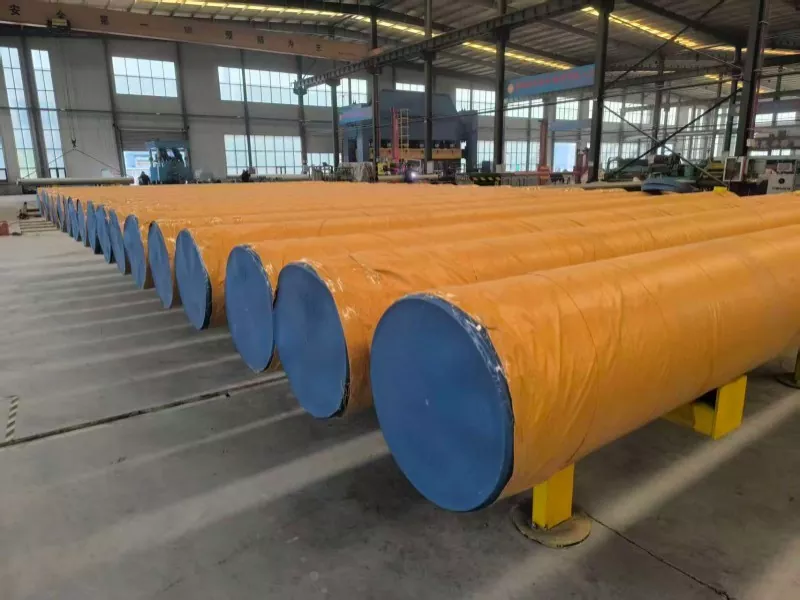
What sets Shiwei apart is our holistic view of the pipe life cycle. Our applications engineers work with your design team to specify the optimal grade and schedule, balancing corrosion science with budget reality. We provide full material test certificates (EN 10204 3.1 or 3.2), PMI reports, and digital radiographs of weld seams upon request. Our logistics network delivers across six continents with careful packaging—beveled ends protected, plastic caps sealing the interiors—so that pipes arrive on site in pristine condition. Post-delivery, technical support continues, whether you need welding procedure qualifications or advice on chloride limits for a particular temperature operating window.
Water treatment is fundamentally about environmental stewardship. The materials we use must mirror this ethos. Stainless steel is infinitely recyclable without degradation. Our manufacturing facility recovers 98% of process scrap and uses closed-loop water cooling to minimize resource consumption. By choosing a stainless steel welded pipe for water treatment, you embed sustainability into the asset itself—longer replacement cycles mean less mining, less transportation carbon, and less disruption. Many of our clients are now earning LEED or BREEAM credits simply by documenting the recycled content and durability of our piping.
Field installation of welded pipe can seem daunting compared to push-fit plastics. We’ve transformed this perception by offering pre-fabricated spool sections with flanged ends and alignment guides. Weld-mapping sheets and sequenced pallets allow a construction crew to install a 250-meter mainline in a single shift. On-site orbital welding kits, which we can supply through partners, further guarantee consistent joint quality, reducing the dependency on highly specialized trades. The result is a schedule that rivals traditional materials, with none of the life cycle compromises.
| Nominal Bore (DN) | OD (mm) | Standard Wall (mm) | Weight (kg/m) 304 | Typical Length (m) |
|---|---|---|---|---|
| DN50 | 60.3 | 2.77 | 4.07 | 6 |
| DN100 | 114.3 | 3.05 | 8.50 | 6 or 12 |
| DN200 | 219.1 | 3.76 | 20.4 | 12 |
| DN400 | 406.4 | 6.35 | 64.1 | 12 |
| DN600 | 609.6 | 7.92 | 119 | 12 |
Other schedules and lengths up to 18 meters available. Custom diameters delivered on project basis.
Compliance with potable water regulations depends on the alloy’s composition and surface condition. Our 304L and 316L grades are certified under NSF/ANSI 61 and AS/NZS 4020, meaning they do not impart taste, odor, or harmful substances. The welded joint, when properly annealed, is free from gaps that could harbor pathogens, and the passive chromium oxide layer prevents corrosion by-products from leaching into the water. We also provide documentation that covers the entire supply chain, from steel melt to finished product, ensuring full accountability for drinking water safety.
Welding naturally alters the microstructure at the fusion zone and heat-affected area. Without proper control, chromium carbides can form at grain boundaries, depleting the surrounding area of chromium and making it vulnerable to intergranular corrosion. At Shiwei Industry And Trade Group Co., Ltd., we either use low-carbon grades (L-grades) or apply in-line bright annealing that restores a uniform solution-annealed condition. This ensures that the weld is not a weak link. For extremely aggressive waters, we can post-weld pickle and passivate to remove any heat tint and rebuild the passive layer.
Absolutely. Wall thickness determines pressure holding capability. Our standard schedule 10S pipe handles typical plant pressures up to 1.6 MPa, while schedule 40S or 80S handles over 10 MPa. The welded seam, when subjected to 100% radiography, shows no reduction in burst strength compared to the base metal. We regularly supply tubes for reverse osmosis feed lines operating at 80 bar and also for gravity-fed clarifier effluent lines with just 0.2 bar. Our engineering team can assist in selecting the optimum thickness to avoid over-specification and control costs.
Chlorine dioxide is a strong oxidizer, yet when dosed within typical limits (up to 1 ppm residual), 316L stainless steel welded pipe offers a service life exceeding 50 years. The key is to maintain a consistent passive layer and avoid crevices. Our pipes’ smooth welds and controlled surface roughness (Ra ≤ 0.8 µm) deter localized attack. We recommend periodically monitoring oxidation-reduction potential (ORP) and ensuring flow velocities above 1.5 m/s to prevent deposition. In adverse scenarios with very high residuals, we can upgrade to 2205 duplex or 904L, with proven performance in waste incineration scrubbers.
Yes. Our technical team can travel to your site for the initial phase of installation, offering guidance on handling, storage, and welding setup. We have partnered tooling providers that can supply calibrated orbital welding equipment and training. Additionally, we provide detailed installation manuals, weld qualification records, and consumable recommendations tailored to the specific alloy. This practical engagement ensures that the theoretical advantages of our stainless steel welded pipe for water treatment are fully realized in your operating plant.
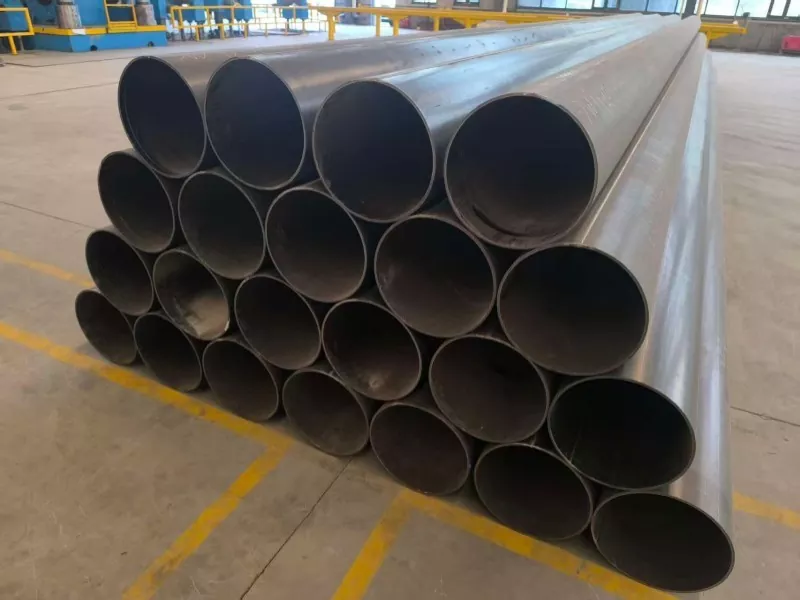
Recognizing that pipes alone do not create a system, Shiwei Industry And Trade Group Co., Ltd. offers compatible fittings, flanges, and gaskets manufactured to the same rigorous standards. All wetted components are traceable, and our flange facing tolerances conform to ASME B16.5, ensuring leak-free joint integrity. By single-sourcing through us, you eliminate the risk of galvanic incompatibility and mixed quality that plagues multi-vendor assemblies. Our inventory programs can also hold buffer stock for your plant’s specific sizes, making emergency replacements a non-issue.
One memorable project involved a coastal treatment works expansion that was delayed by monsoon rains. The piping was the critical path item. Shiwei mobilized a production schedule that delivered 12 kilometers of DN300 316L welded pipe, complete with weld-end preps and 3.1 certificates, in five weeks—a timeline that local suppliers deemed impossible. The plant commissioned on time, and the owner later reported that the smooth internal surface had actually improved the pump station’s efficiency by 3% compared to the original design assumptions. Stories like this underline why leading EPC contractors now specify our products by name.
Modern water treatment geometries are increasingly complex. Curved clarifier rake arms, space-constrained membrane skids, and modular containerized plants all require piping that can be cut, bent, and joined with minimal fuss. The ductility of austenitic stainless steel allows cold bending to tight radii without cracking the weld. Furthermore, the uniformity of our welded pipe means that when you order a 6-meter length with a specified OD tolerance of ±0.5 mm, you receive exactly that, enabling precise fit-up with compression couplings or grooved mechanical joints. This predictability translates into faster field assembly and fewer wasted offcuts.
Regulatory frameworks vary—from the EU’s Drinking Water Directive to Japan’s MHLW Ordinance No. 57. Our quality management system ensures that the appropriate certifications accompany each shipment. We test for leaching of heavy metals per BS 6920 and DIN 50930, and we keep a full archive of mill certificates for 20 years. For projects funded by development banks, our transparent pricing and documented ethical sourcing align perfectly with procurement guidelines. The stainless steel welded pipe for water treatment has become a passport to project approvals, precisely because of the diligence we embed at every step.
In a world where water scarcity is intensifying, the infrastructure that treats and transports water must be resilient, hygienic, and cost-effective over its entire life. At Shiwei Industry And Trade Group Co., Ltd., we are not simply manufacturers; we are partners in safeguarding public health and industrial productivity. Our stainless steel welded pipe for water treatment embodies that mission, combining the timeless integrity of stainless steel with the precision of modern welding technology. When you choose our pipe, you choose peace of mind, knowing that each segment is a link in an unbroken chain of quality that stretches from raw water intake to the clean, safe drop that reaches the end user.
Contact our technical team to discuss your next water treatment project. Request a sample, full metallurgical datasheet, and a visit to our factory where you can witness the manufacturing precision firsthand.